

 Sasq'ets Classic
Redband Trout
Redband must be released.
You can’t keep a redband trout. Every one you catch goes straight back in the water. They don’t count in this derby and can’t be weighed in. If you’re not sure whether a fish is a redband, let it go.
Every onegoes back
Every redband you catch goes back in the lake, and it should go back able to swim off. Keep it in the water as much as you can and let it go fast. Here’s how to release one.
Redband are the native rainbow trout of the interior Columbia basin, the fish that was here before anyone stocked anything. They come from the country east of the Cascades and they’re built for its warmer water and harder seasons.
They’re a subspecies of rainbow, so a redband and a stocked rainbow can look a lot alike. Before you keep any trout, make sure it isn’t a redband. If you can’t tell, let it go.
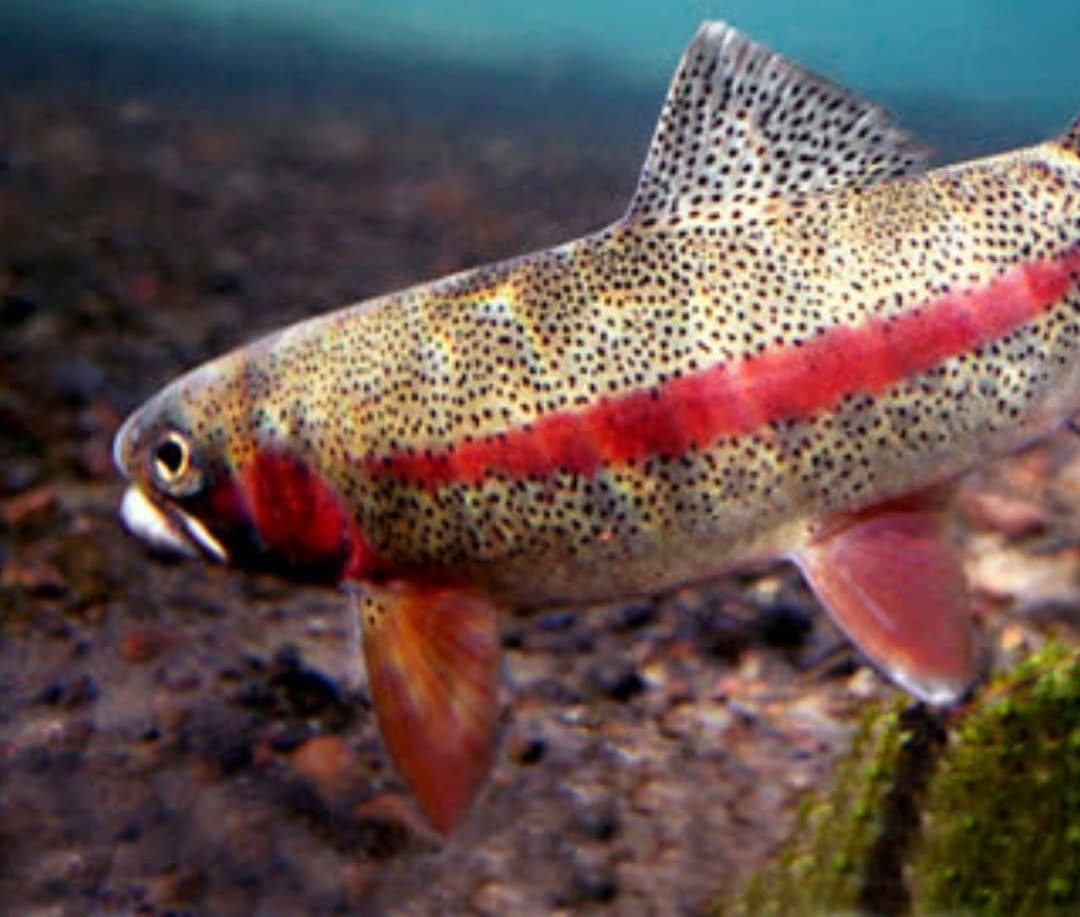
Telling one apart
Start with the adipose fin. It’s the easiest check there is. Then five more things to look at, roughly in order of how easy they are to spot. None of them is proof on its own, and the last one explains why.
The adipose fin
The small fleshy fin on the back, between the big dorsal fin and the tail. It's the quickest thing to check, and you can see it with the fish still in the net.
Hatchery fish are often marked by clipping it off. Not every stocked fish gets clipped, so a fin that's still there doesn't prove you have a redband, but it's your cue to slow down and check the rest of the list before you keep it.
Check the current WDFW pamphlet for how fish are marked on this water and what that means for keeping one.
The band
A brick or rust-colored stripe down the flank, usually narrower and deeper in color than the soft pink of a stocked rainbow. On a spawning fish it really stands out.
Parr marks
Oval smudges along the lateral line. Redband often keep them as adults. Most rainbows lose them when they're young, so a grown fish that still has them is worth a second look.
Fin tips
The lower fins have white or pale orange leading edges. The back runs olive to brassy instead of the silver you see on a fresh hatchery fish.
Spotting
Most of the spots sit above the lateral line and across the tail, with fewer underneath. They're usually finer and sharper than the spots on a stocked fish.
What it can't tell you
Stocked rainbows and native redband interbreed, and a fish with both in it can look like either one. These marks help narrow it down, but only a genetic test can tell you for sure.
Use this to help you look a fish over. It isn’t a legal ID. What you’re allowed to keep comes from the WDFW pamphlet and tribal rules, and both outrank anything on this page.
Putting one back
This is a weigh-in derby, so you’ll keep some fish. But every redband goes back, and most of the other fish you handle on a derby weekend won’t be the one you weigh either. Whatever you release should go back in good enough shape to make it.
Who manages this water
Four organizations have a say in what happens on Lake Roosevelt, and we’re not one of them. Theirs are the rules you’re actually fishing under.
- Spokane Tribal FisheriesThe tribe's Lake Roosevelt Fisheries program, the group that actually runs this reservoir's fishery. This link goes there instead of the tribe's main site.
- Colville Confederated TribesFish & Wildlife. The Colville reservation runs the length of the reservoir's west and north shore.
- WDFW fishing rulesThe pamphlet: seasons, limits, size rules and any marking requirement. If it ever disagrees with this page, go with the pamphlet.
- WDFW redband profileThe state's own page for inland redband, opened to its conservation status. The general rainbow page lumps them in with everything else, so skip that one.
- Lake Roosevelt NRAThe National Park Service runs the recreation area: launches, campgrounds, closures and access.
Permits and licensing for this derby, including which tribal permit you need to fish from shore, are on the resources page.
Ready to fish it
Ticket sales fund the prize pools, so every ticket sold means bigger prizes for the anglers who place.